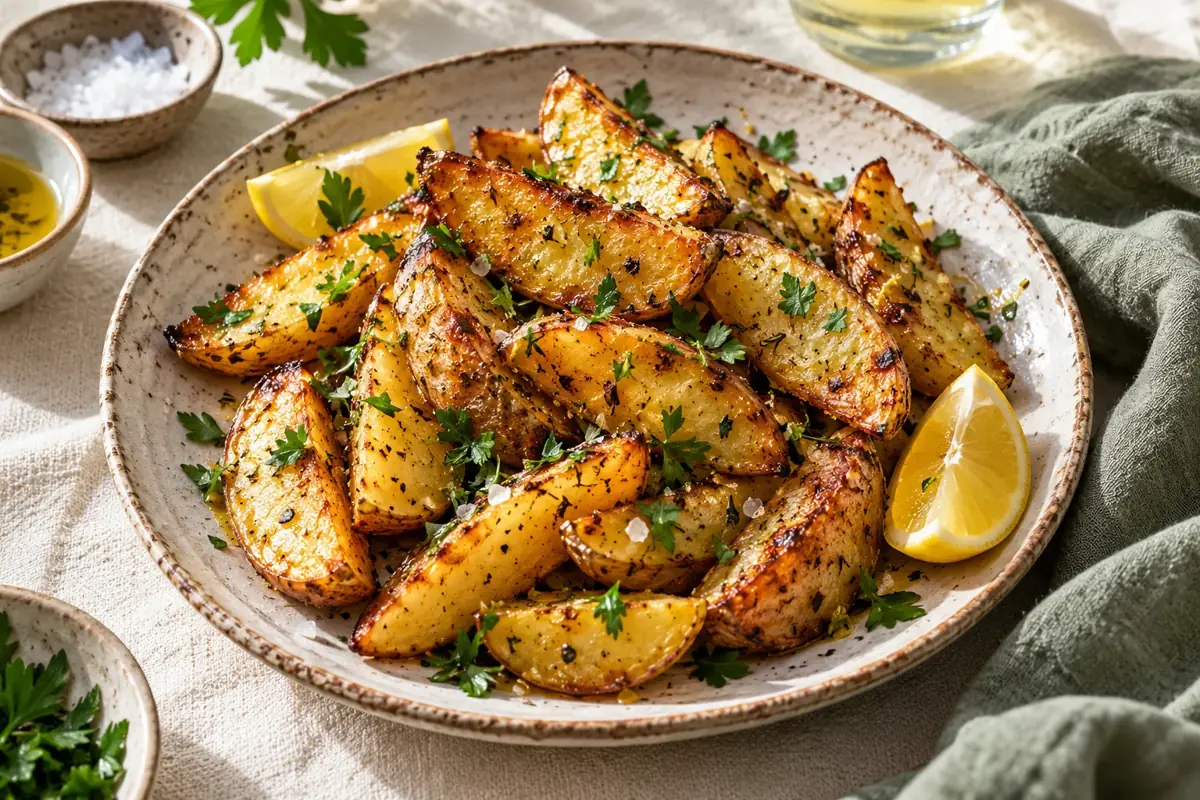
Start with even cutting
Similar-sized pieces cook more evenly. Very thin pieces can burn before thick ones are tender. Use one shape and size throughout the tray.
Dry them and leave space
Excess water and crowding encourage steaming. Dry the surface after washing and arrange one layer with gaps for steam to escape.
Watch your own oven
Preheat the oven and turn pieces halfway through. Written times are a starting point: oven strength, tray material and potato size affect the result. Aim for a tender centre and golden edges, not a very dark surface.
Add lemon at the end
Adding lemon juice when serving keeps the surface drier during baking. The result is different from deep frying but can still be delicious.
Try a small batch first
Try one layer of similar-sized pieces rather than a packed tray. Dry well and distribute oil instead of pouring it in one spot. Uneven pieces mean thin ones brown before thicker pieces soften.
If browning comes before tenderness
Do not simply increase the heat when potatoes are still firm. Check thickness, tray position and oven temperature. Move the tray or lower the heat as the recipe requires. Open a large piece and check tenderness rather than colour alone.
Choose a method that suits your time
Oven wedges and pan potatoes give different results. The site has both oven wedges and lemon pan potatoes. Check each recipe's time and quantities rather than copying oil amounts and times between methods.
Choose your ingredients and explore matching recipes with quantities and steps.
What's in your kitchen? →