Not everything goes in together
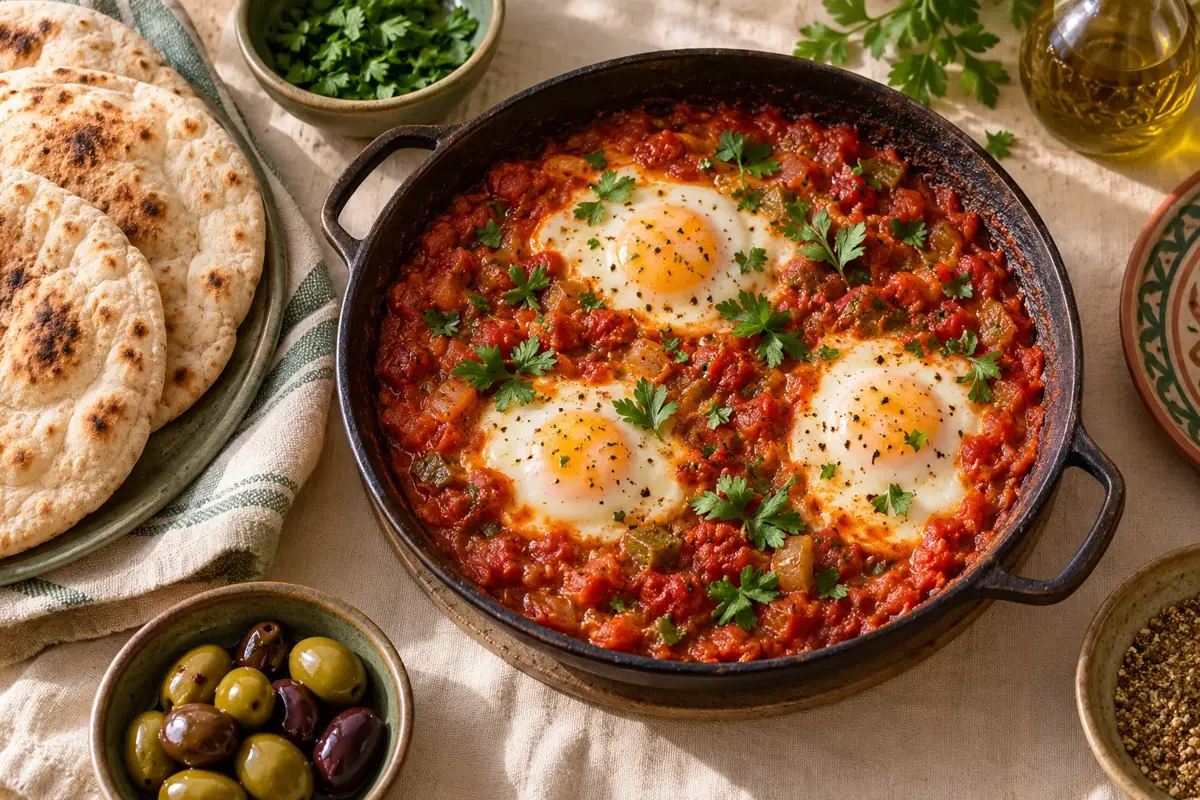
Start with onion or vegetables that need longer, then add quicker ingredients. For shakshuka, thicken the tomatoes before adding eggs so the eggs do not cook while the sauce is still watery.
Choose a suitable pot or pan
A wide pan helps liquid evaporate. A deep pot suits soups and brothy dishes. Do not fill to the rim; leave space for stirring.
Prepare before turning on the heat
Read the whole recipe, wash and cut vegetables, and measure ingredients. These few minutes make cooking calmer and help prevent forgotten ingredients or onions burning while you chop.
Doneness matters more than the clock
Times are approximate. Check vegetables' texture and cook eggs until both whites and yolks are firm. For meat dishes, follow internal temperatures recommended by official food safety sources.
Plan the order of ingredients
Before starting, identify what needs longest and what cooks quickly. Onion differs from eggs, and thick potato cubes from minced garlic. A one-pot dish works when the order supports even cooking.
Pan size matters
Doubling ingredients in the same small pan causes liquid to collect and changes cooking. Use a wider pan or cook in batches. Check your cookware is oven-safe if the recipe moves from stove to oven.
An example from the site
Shakshuka starts with onion and tomato before eggs, whereas potato and eggs requires preparing the potatoes as directed. Start with a clear recipe rather than combining random ingredients in one pot.
Choose your ingredients and explore matching recipes with quantities and steps.
What's in your kitchen? →